


At the Valley Suns, Development Meets Opportunity for Everyone
By Valley Suns Staff /December 30, 2025
Only nine miles separate the Phoenix Suns’ practice facility and Mullett Arena in downtown Tempe, where the Valley Suns compete in the NBA’s G League.
In one of the more unique setups in the league, young NBA players have an opportunity of a lifetime to maximize their potential – play 30+ minutes for the Valley Suns on a Tuesday night, then wake up Wednesday morning and take what you learned to Phoenix Suns practice, applying it while battling for a rotation spot.
The Valley Suns were announced as Phoenix’s G League affiliate in May 2024, giving the Suns a true developmental pathway that would quickly become a powerful tool in the organization.
Brian Gregory wasn’t in his current general manager role at that point, but he could see Mat Ishbia’s vision and wanted to help carry it out.
“When the decision was made to start the Valley Suns,” Gregory explains, “I think there was a conscious effort and gameplan implemented, and verbalized by Mat, that we need to have the best G League [team]. In terms of the resources, the type of people we’re bringing in, our gameplan for our players. Not just our two-way players, but the ones we sign to Exhibit 10s and the ones we sign to regular G League contracts.”
Guiding players to new career heights is the foundation it was built on. But success at the G League level is shaped just as much behind the scenes as it is on the floor.
From the first day Ishbia arrived in Phoenix as the franchise’s owner, he made it clear: The Suns and Mercury were going to invest in people.
Every coach. Every trainer. Every staff member.
Ishbia manifested a culture centered on putting human beings first. And within their roles in the organization, every person’s ability to perform their job was maximized. That includes elevating workspaces, medical treatment, dietary needs, and travel experiences for all personnel.
There has been no greater example of that over the last 20 months than the Valley Suns.
John Little became the Valley Suns' first head coach in July 2024 shortly after the team announced Mullett Arena as its new home. He had spent five years around the G League as an assistant coach for the Wisconsin Herd and Maine Celtics.
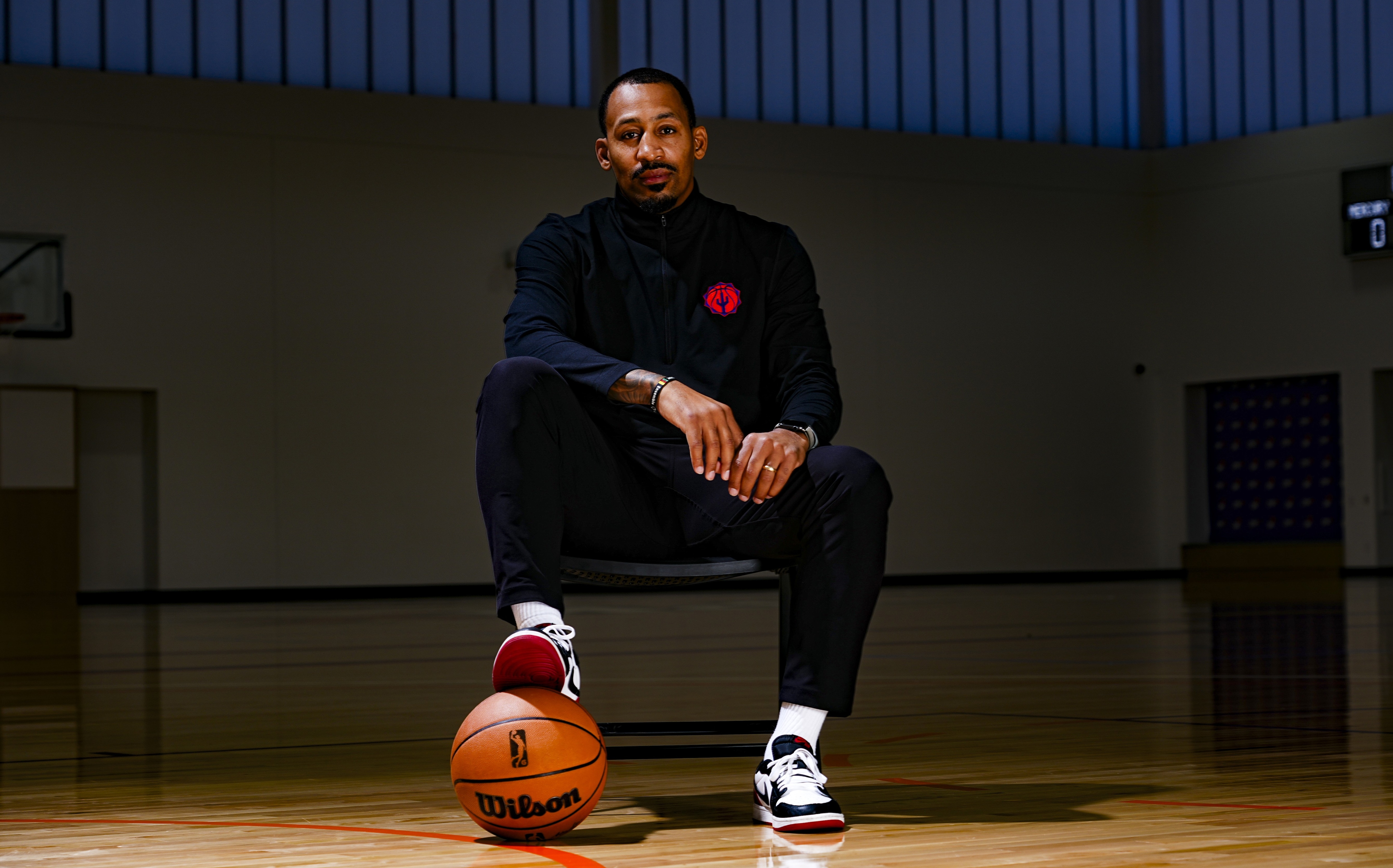
Under his leadership, the Valley Suns tied for the third-best record in the West and advanced to the Conference Semifinals. It was a major success for the inaugural season, particularly with everyone learning a new process and figuring things out on the fly. But it served as a blueprint of what Phoenix always needed – a close and symbiotic connection with the developmental league.
Last summer, when Ott took over the head coaching job in Phoenix, his first task was assembling a well-rounded staff. He knew the importance of having assistants with strong communication skills that could form trusting relationships with players. Therefore, he wanted to keep Little in the organization, making him one of his assistant coaches.
“For me, I was just really grateful for the opportunity,” Little says. “Great reps for me, as the head coach, going through that seat and having to manage a staff and really work with some great people. I learned a ton throughout the year. And then as everything happened, Jordan coming in. Really grateful for him giving me the opportunity to move up and continue to learn under these guys, the great staff he’s put together.”
One of the players Little coached last season? You may have heard of him.
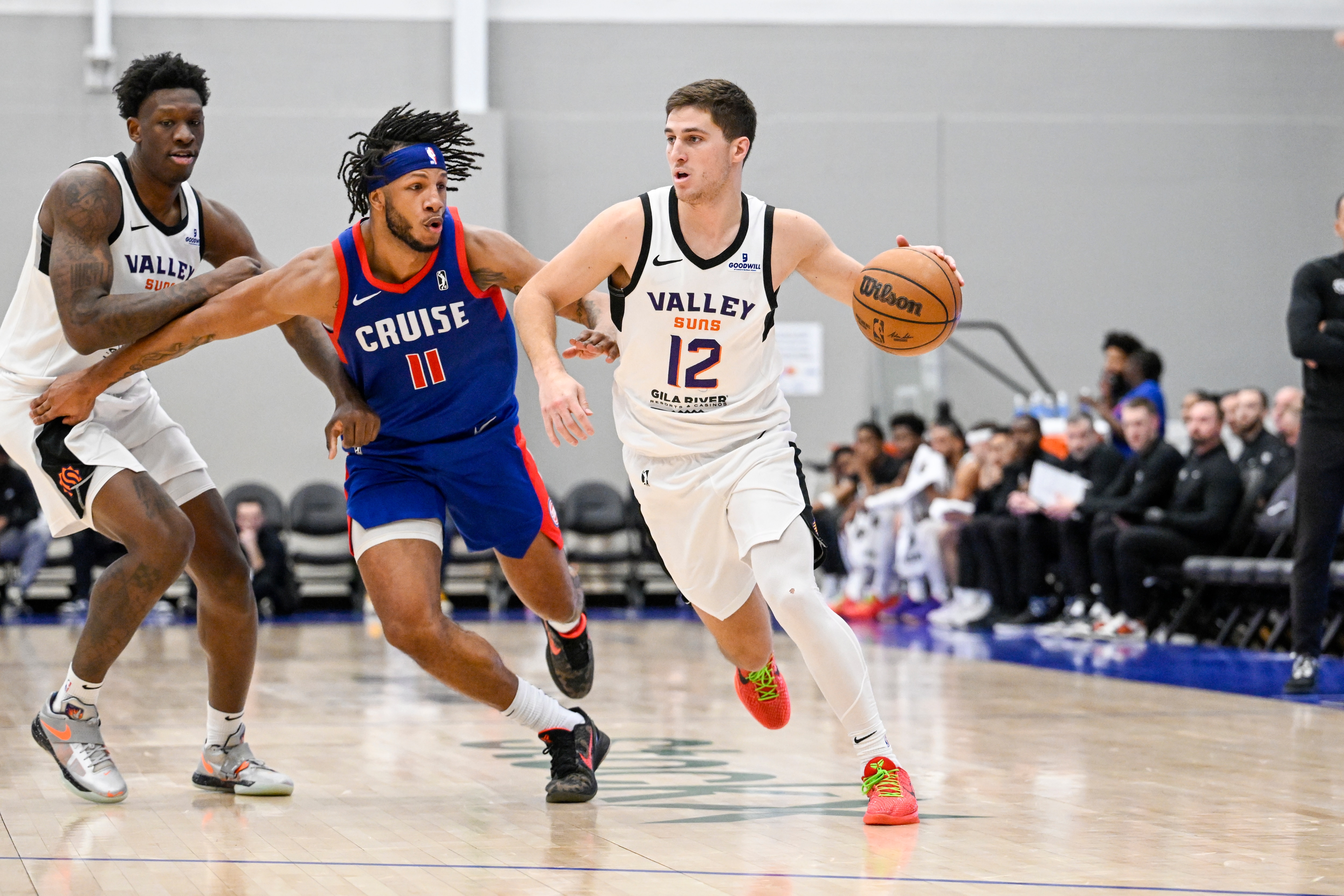
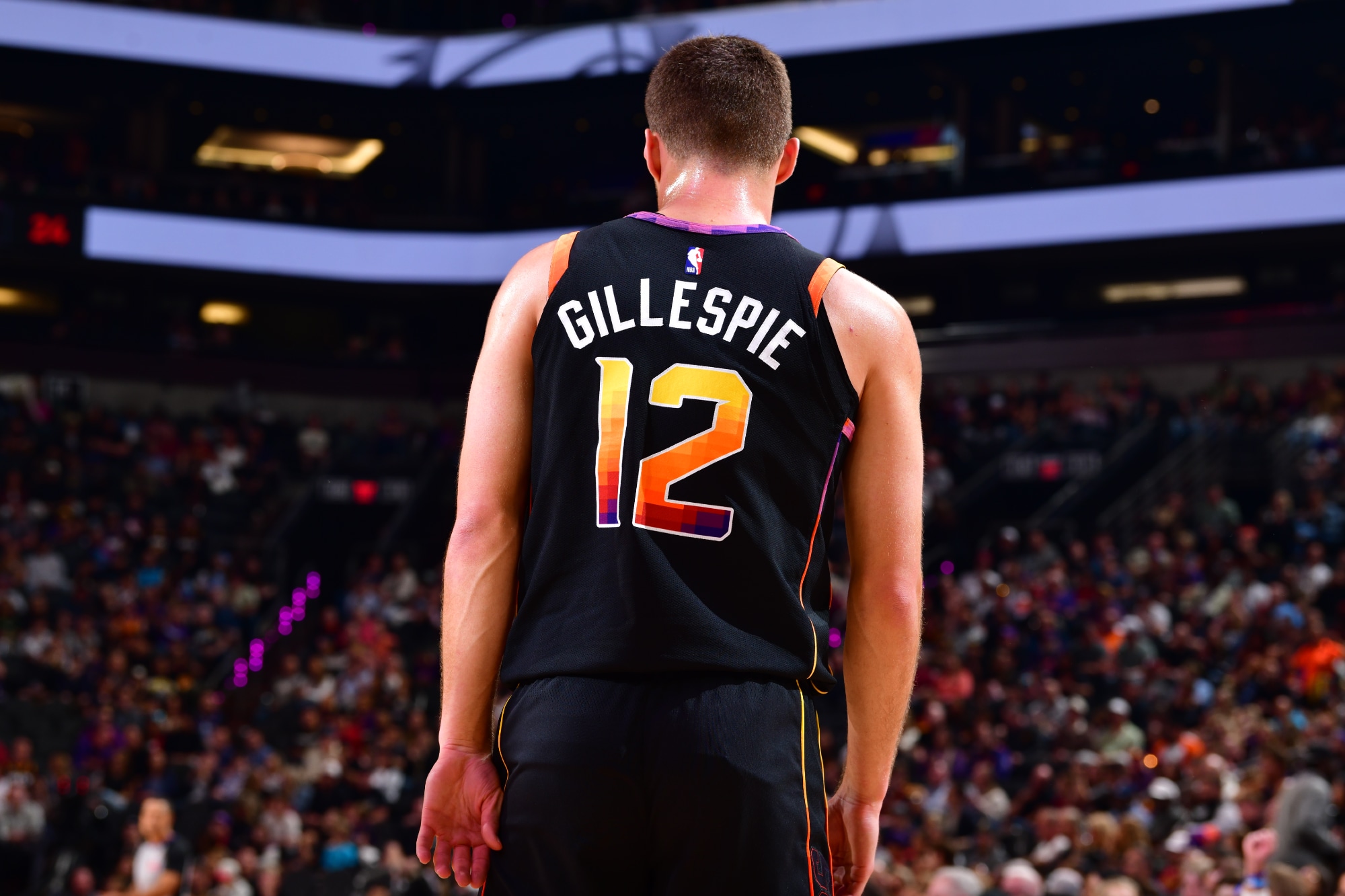
Collin Gillespie, now a fan-favorite around the city, is proof of the G League paying off and improving one’s craft.
He played 10 games for the Valley Suns during the inaugural season, using those minutes to stay sharp while he wasn’t consistently in Phoenix’s rotation. He thrived on both ends of the floor, averaging 21.2 points, 10.8 rebounds, and 7.5 rebounds to lead the Valley Suns to important wins.
It helped Gillespie earn minutes at the NBA level during the final weeks of the season. Now, months later, he’s one of the most irreplaceable talents on the team and finds himself in the top 10 among all NBA players in three-pointers made.
“The biggest takeaway is, those reps matter,” Little said. “Collin was a great teammate in the G League and a great player. Going down there and how seriously he took it, how seriously he took his teammates. All of those things matter, and I think it put Collin in a great position along with his hard work this summer."
Those reps extend to the video room, too.
Stephen Howard, a player development assistant with the Phoenix Suns, also got promoted because of how much his tenacity resonated with leadership.
Howard served as the Valley Suns' lead video coordinator last season, working in tandem with the coaching staff and scouting for upcoming opponents. He had prior experience with Little during the 2021 season as a development coach in Wisconsin. Howard's tireless work ethic and attention to detail caught everyone's eye in the Suns organization, leaving a good impression that would help elevate his role.
“It’s a development tool for everyone,” Little said about the G League experience. “Whether it’s the business, front office, or our coaching staff. All those little things – the hard work you’re putting in, the effort of everyone pulling in the same direction to reach the goal and us to win – they’re getting their opportunity to come up and continue to grow in their respective spots.”
Word travels fast around the NBA. This is only year two of the Valley Suns, and people have already recognized how the organization provides career stepping stones. As it continues to grow, basketball personnel from all over the country will aim to get their start in Phoenix.
“When we have opportunities to hire people, we’re going to be able to bring in the best,” Gregory says. “Because those people will know that, one, they’re in an environment where there’s unbelievable care for them. We’re going to push them to be their very best, and they’re going to have every resource and tool needed to become their very best.”
Gregory says there are a number of personality traits and habits they look for in these positions. Those include having a deep care factor for the profession, working with extreme urgency, being accountable, staying coachable, and never believing a job or duty is too small.
More than anything, it’s about attracting highly-driven people. A lot of those can be internal, too, with personnel growing with the company and learning new skills.
Justin Pruneau, who has been with the franchise for eight years in various roles, spent last season as the Valley Suns' Manager of Equipment Operations. After a successful year, the team elevated him to the Phoenix Suns' staff as Assistant Equipment Manager.
Pruneau is the latest example of how sticking to the grind, being dedicated, and welcoming new responsibilities will lead to career advancements. A few years ago, he served in a part-time role while pursuing a college degree in Sports Management, consistently showing up and working extra hours. By keeping a positive attitude and always looking to improve the team, even in the smallest of ways, Pruneau worked his way up the ladder.
That’s one of Gregory’s strongest identifiers of high character. Be willing to help the group and embrace problem-solving, not searching for excuses or reasons why something didn’t work.
“We always talk about bringing in people who are thumb pointers, not finger pointers,” Gregory says.
Since there’s always a finite number of openings with any basketball staff, part of the Suns’ goal is to help people prepare for what’s ahead. They want players, coaches, and anyone in operations to build a skill set that makes them a prime candidate for the next position. Even if it’s with a different team.
“They’re going to have an opportunity, if it presents itself, to move up within our organization,” Gregory says. “But at the same time, they understand they’re going to be very well prepared when an opportunity opens up somewhere else. They’re going to have our full support in helping them try to get it. And they’re going to be ready for that spot.”
Paul Jesperson is another person earning more responsibilities as he took over as Valley Suns head coach this season after being on Little’s staff last year.
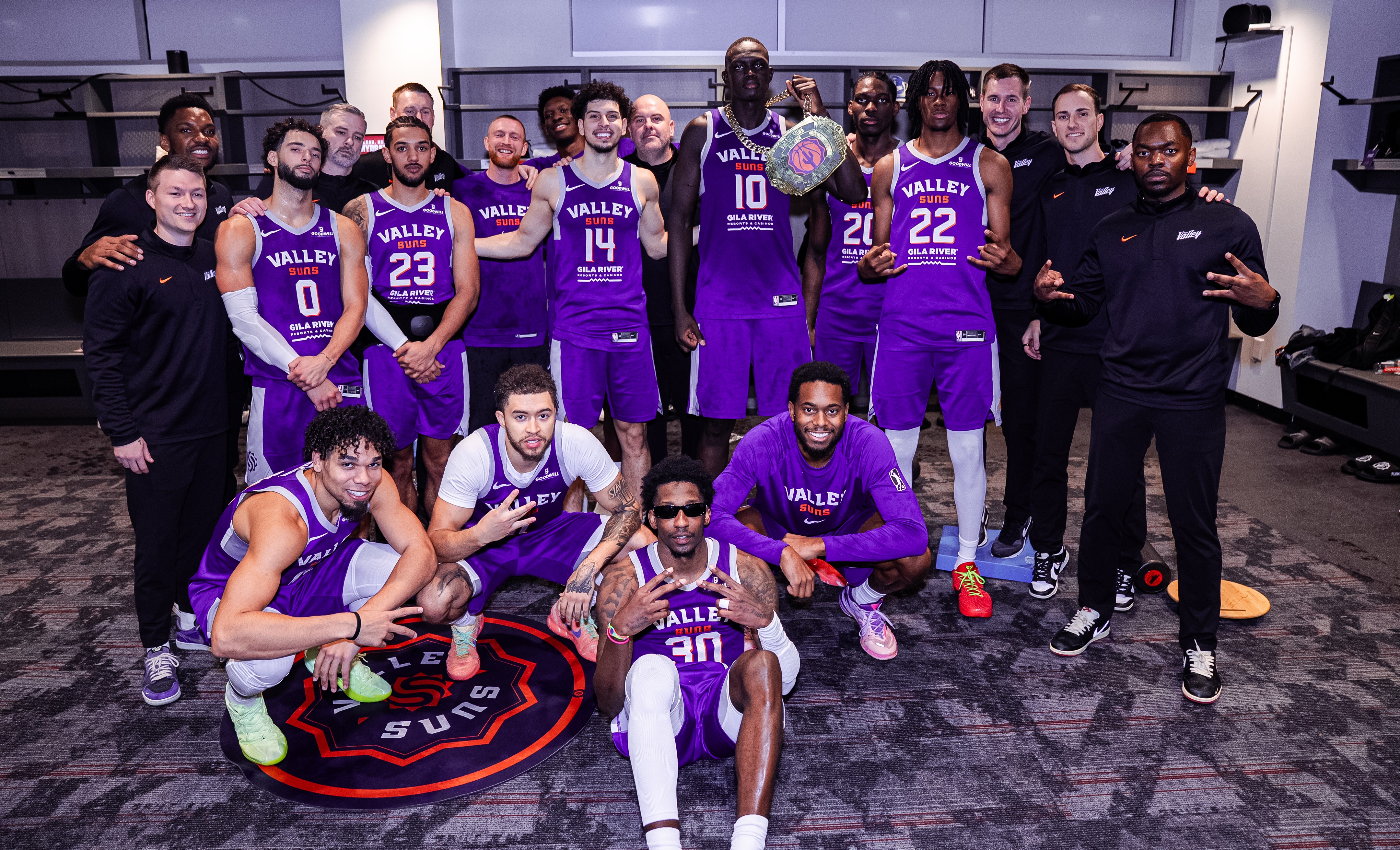
Ishbia knew that investing more into people and revamping the organization’s culture meant improving facilities and giving everyone the opportunity to practice in the best environments.
Therefore, he quickly found the best spot for a new 58,000-square-foot practice facility, the Mountain America Performance Center, located just three blocks from the team’s arena. Home to the Phoenix Mercury, it cost Ishbia $100 million to build – all privately funded – and he expedited the construction so that it could open in record time.
The Valley Suns also practice there since the season doesn’t overlap with the Mercury.
As Little tells me, it’s a different type of treatment and attention to detail that he’s not used to seeing at that level, in terms of both practice resources and nutrition.
“I think the biggest part is just the great facility and what we’re able to offer for a G League team,” Little said. “It’s just unique to any other team in the league. I’ve had the privilege to work for a lot of teams, but the care that we’re given – we’re in a brand new state-of-the-art facility over there with the Mercury. From our chefs, being able to feed our guys, locking in to their nutrition, the weight room, and our setup … it really is a first class look for most G League teams.”
On the player side, Rasheer Fleming and Khaman Maluach are reaping the benefits every day.
Both have enjoyed their moments playing for the Valley Suns, having chances to start and finish games and see the tangible progress carry over.
Fleming has been able to get more comfortable on the ball, making decisions on the offensive end that don’t always come to him when he’s playing with Phoenix. Maluach is using his G League experience to soak up the knowledge and enhance every part of his game, showcasing how impressive he will be as a paint defender in the NBA.
“Every opportunity we have for those guys to get some minutes, play with officials, and be able to take something from a timeout to the court, it’s just valuable reps,” Little said. “It gives them more confidence and when they get their opportunities with [Phoenix], they just feel a little bit more ready. Because they’ve been in games, and they’ve been reffed by officials.”
And, of course, the rookies are thankful they can rejoin their Suns teammates at practice just 12 hours after playing crunchtime minutes.
The proximity between the Valley Suns and Phoenix Suns allows for certain advantages that most G League teams didn’t have in the past – and still don’t in most cases.
Mike Muscala, currently an assistant coach for Phoenix, experienced it firsthand when he played for the Atlanta Hawks. Because the Hawks didn’t yet have a location for their new G League team, they played their home games in Erie, Pennsylvania for the first two seasons. That’s roughly 800 miles north of Atlanta, eliminating the opportunity for players to coordinate their schedules to attend both G League and NBA events just days apart.
Mark Williams also went through it, just on a smaller scale. He laced up for the Greensboro Swarm during his rookie season as the Hornets wanted him to get some valuable playing time. However, Greensboro is about 100 miles from Charlotte. If the Swarm had multiple games within a few days, he wasn’t able to bounce back and forth to stay connected with his Hornets staffers and teammates each day.
The Suns have developed a system beneficial to its players, coaches, and cultivating the working relationships between them. For developmental purposes, it was important to the Suns for both coaching staffs – Valley and Phoenix – to teach the same style and tendencies. As Little says, it’s about everyone speaking the same language so that players get the right messaging and avoid confusion as they go back and forth between assignments.
One instance of that is how the Valley Suns are teaching Maluach and Fleming the same defensive principles they’re learning every day at NBA practice.
In a recent Valley Suns victory, Maluach imposed his will defensively in the second half by disrupting every pick-and-roll he defended. Jesperson praised his efforts after the game, explaining how the Valley coaching staff is encouraging Maluach to defend higher on the floor while guarding ball-screens – something Ott and the Phoenix staff have echoed with their centers since day one of training camp.
“We want to play the same way, and that is Suns style of basketball,” Little says. “Being up in pick-and-rolls, being aggressive with our talk, our heat and the ball-pressure. All of those things are valuable to us.”
From top to bottom, the alignment between the Valley Suns and Phoenix Suns is the primary reason they will become one of the top player development pipelines in basketball.
Identifying high-character individuals and investing resources into them has been the Suns’ consistent message all year.
Gregory and the front office want to have the same approach to the coaching staff, the strength and conditioning staff, and basketball operations.
Less than three years into Ishbia’s ownership and two years into the Valley Suns existence, they can be incredibly proud of their progress across the board.